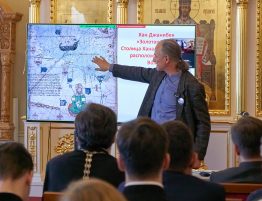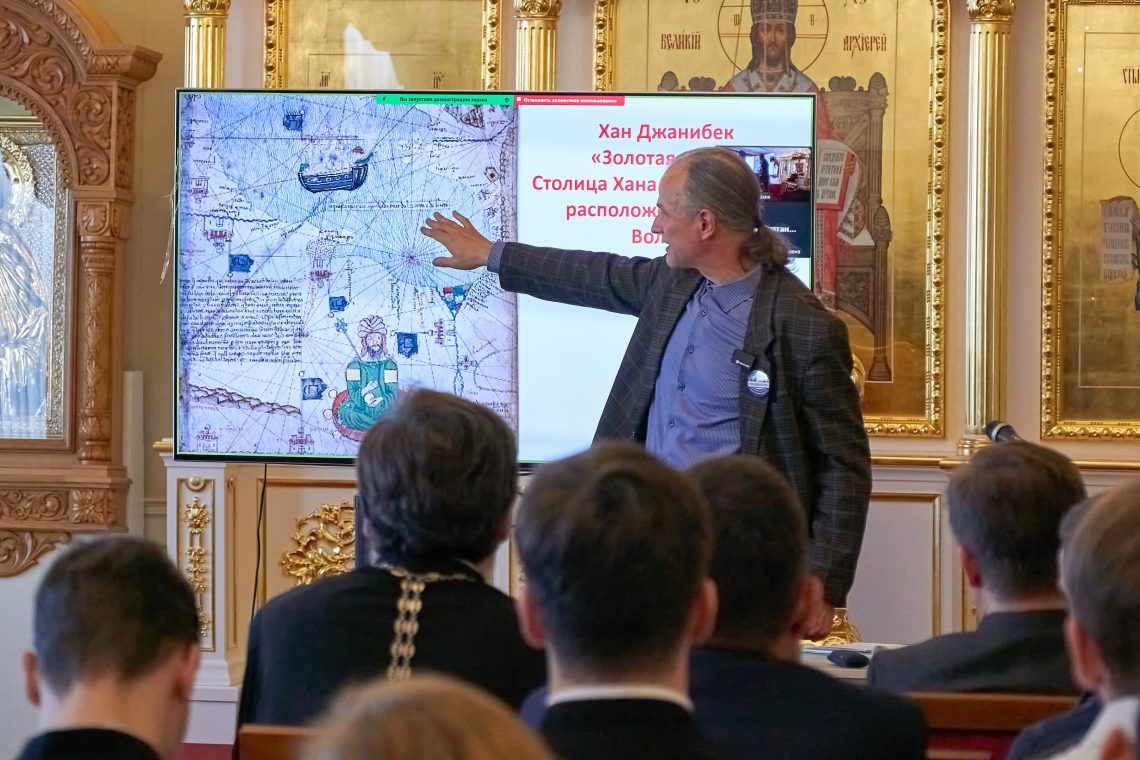
On November 16, 2024, an international conference was held in Bishkek, dedicated to the topic of ancient Eastern Christianity, its history, and its influence on the culture of the peoples of Central Asia.
Historical Heritage of the Region
Central Asia has long been a crossroads of global cultures and religions. Christianity has left a profound mark on the region’s history, as evidenced by numerous archaeological discoveries preserved to this day. The conference was dedicated to the memory of Pyotr Semyonov-Tyan-Shansky, a renowned explorer and traveler who was among the first to study the Christian heritage of the Silk Road.


Goals of the Conference
The event aimed to achieve several objectives:
- Presenting new scholarly research on the history of Christianity in the region.
- Discussing the significance of Christian heritage for contemporary cultural and spiritual development.
- Creating a platform for collaboration among scholars, historians, and archaeologists.


Key Presentations
The conference featured the following topics:
- Vladimir Rudenko (Russia): «Pyotr Semyonov-Tyan-Shansky – A Pioneer in the Study of Ancient Eastern Christianity on the Silk Road.»
- Boris Zheleznyakov (Kazakhstan): «Ancient Christianity in Southern Kazakhstan Based on Archaeological Data.»
- Valery Kolchenko (Kyrgyzstan): «Christian Monuments at the Medieval Krasnaya Rechka Settlement.»
Key Presentations
Vladimir Rudenko: Research by Pyotr Semyonov-Tyan-Shansky
Vladimir Rudenko, Master of Humanities and member of the Moscow branch of the Russian Geographical Society, presented a report titled:
«Pyotr Petrovich Semyonov-Tyan-Shansky – A Pioneer in Historical and Geographical Studies of Ancient Eastern Christianity on the Silk Road.»
Key points from the presentation:
- Semyonov-Tyan-Shansky’s Role in Studying Central Asia:
Rudenko detailed the explorer’s scientific expeditions to the Tian Shan Mountains, which gathered unique data on the geography, flora, and fauna of the region while also addressing cultural interactions. - Historical and Cultural Research:
Semyonov-Tyan-Shansky explored not only natural resources but also ancient monuments, which provide evidence of Christianity’s presence in Central Asia. - Relevance to the Modern Era:
The speaker emphasized that Semyonov-Tyan-Shansky’s work remains a valuable resource for studying the historical and archaeological evidence of Christianity in the region.
This presentation reminded attendees that studying Christian heritage requires an interdisciplinary approach and ongoing exploration.
Boris Zheleznyakov: Ancient Christianity in Southern Kazakhstan
Boris Zheleznyakov, Senior Research Fellow at the Margulan Institute of Archaeology, shared findings from research on Christian sites in Southern Kazakhstan.
Highlights of the presentation:
- Discovered ruins of ancient churches adorned with frescoes depicting Gospel scenes.
- The role of Christian communities in establishing spiritual hubs along the Silk Road.
- Archaeological findings, including crosses, ceramics, and household items, which confirm the existence of developed Christian settlements.
Zheleznyakov emphasized that Christianity played a significant role in shaping the region’s spiritual and cultural legacy.
Valery Kolchenko: Christian Monuments in Kyrgyzstan
Valery Kolchenko, Senior Research Fellow at the Dzhanov Institute of History, presented findings on archaeological discoveries in the Chuy Valley, including the famous Krasnaya Rechka settlement.
Main conclusions:
- Remains of churches, inscriptions in Syriac, and crosses point to strong Christian influence in the region.
- Krasnaya Rechka might have been a spiritual center of Christian life in the Middle Ages.
- Research demonstrates that Christianity in Kyrgyzstan had deep roots and was integrated into local traditions.
Alexander Kamyshev: Tash Rabat – A Monastery on the Silk Road
Alexander Kamyshev, Ph.D. in History, proposed a new hypothesis about the purpose of the famous Tash Rabat caravanserai.
Notable aspects of the presentation:
- Archaeological evidence suggests that Tash Rabat may have been a Nestorian Christian monastery.
- Fragments of pottery with Christian symbols support the building’s religious context.
- The monastery served as both a spiritual and cultural hub, linking East and West.
Kamyshev underscored the importance of such discoveries in restoring the historical truth about the region’s Christian heritage.
Denis Sorokin: Christian Architecture in Central Asia
Archaeologist and architect Denis Sorokin presented on the unique features of Christian architecture in Central Asia.
Key theses:
- Christian churches in the region combined Byzantine elements with local traditions, creating a unique style.
- These structures facilitated cultural exchange and shaped a shared spiritual landscape.
- Studying architecture provides deeper insight into how faith transformed the cultural environment of Central Asia.
Contributions from Uzbek Researchers
Guests from Uzbekistan shared research on Christian monuments such as Suleyman-Tepe and Ilibalyk, as well as evidence of medieval Christianity in the Tashkent region.
Why Does This Matter Today?
The conference highlighted that the Christian heritage of Central Asia is not merely a relic of the past but offers new perspectives for the modern world. Archaeological discoveries, such as rock carvings and inscriptions, reveal the widespread influence of Christianity along the Silk Road and its interactions with other cultures.
A Contribution to the Present
The event contributed to the advancement of archaeological science, the promotion of historical heritage, and the strengthening of cultural dialogue. In a region where world religions have coexisted for centuries, such studies hold particular significance.